Introduction

It’s extremely important to have a strong online presence if you have a business today; there is little room for error because relying on foot traffic or being in the right place at the right time is basically invisible. The most common ways of generating online traffic are Search Engine Optimization “SEO” and Paid Advertising “PPC ads”; both strategies are designed to drive traffic and sales but work in very different ways.
In some ways, SEO and Paid Ads which is better are competing forces; SEO relies on increasing your website rank in a search way while ads are a pay to play option that immediately puts your business on top of the search results or on front of your targeted platform; saying that, SEO is long term strategy, building credibility through the creation of value ordered content, keyword placement, and tech optimization. When done effectively, SEO takes time (i.e. months) but builds heavy traffic over time and results are sustainable. PPC ads will get you in front of viewers immediately, however if one has a limited budget (ad) which is almost always the case, you will need to increase your Ad spend regularly to maintain the results. You need to decide if your business goals align with SEO or PPC ads, and the course of the strategy will depend on your budget and time in either case. In this article you will learn the pros and cons of both approaches to hopefully help you narrow down what strategy is the best fit for your business growth ambitions.
What is SEO?
Search Engine Optimization (SEO) makes a website more visible in search engines such as google and generates more organic traffic. This can be done by researching keywords to target content development, optimizing technical goals to improve search engine crawling, or performing link building to improve search engine rankings. SEO is a long-term strategy that creates credibility, authority, and sustainable growth without paying for each click.
Many businesses ask their marketing departments, SEO or Ads which is better? SEO is far more cost-effective and when you derive a strong ranking you can form a consistent traffic flow without needing to throw money into advertising forever! Ads will give you instant visibility but will cost you for each click along the way and will require you to keep paying if you wish to maintain these results.
The question but SEO or Ads which is better is based on your desired outcome. If you are looking for immediate results referral activity engages faster with ads. Whereas for long-term success and brand trust building, SEO will be the better decision in the long run. Ideally, a combination of both will provide maximum results.
What are Paid Ads?
Paid ads are either digital or physical advertisements that businesses pay to run and promote their products, services, or brand to an audience they are targeting. With paid ads, businesses can send their marketing messages quickly and efficiently to potential customers, while organic marketing methods can take time to have an impact.
The main benefit of a paid advertisement is the speed at which it puts you in front of your audience, the measurable results you can see quickly, and its ability to target specific audiences based on their locations, demographics, what interests them, or what they are searching for. Google Ads, Facebook Ads, Instagram Ads, and YouTube Ads are just a few of the popular paid advertising platforms that assist businesses with driving traffic, generating leads, and increasing sales.
SEO VS PAID ADS KEY DIFFERENCE
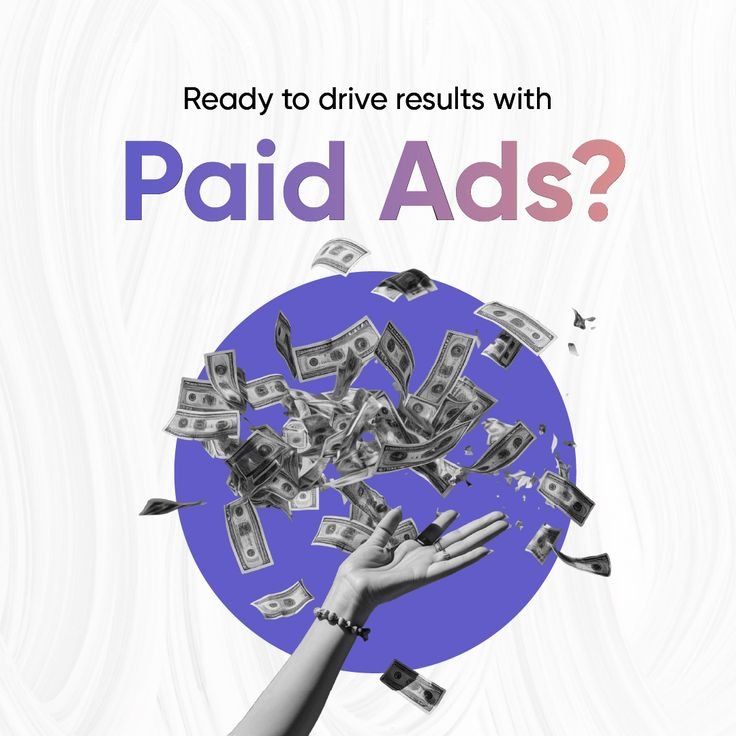
SEO (Search Engine Optimization) and Paid Ads are two effective digital marketing techniques, but they are two very different approaches. SEO is the process of improving a website so that it appears regularly in organic search engine results. Specifically, it looks at the content, keywords, backlinks, and structure of the site so and over time, Google ranks the site higher. In the long run, SEO is cheaper because once a site has a ranking it receives free organic traffic with no ongoing costs. But SEO takes time (often months), and requires consistent work.
Paid Ads are ads that you pay for, which allows a business to appear immediately at the top of search engines or social media. Paid Ads are more targeted, and if you have a budget (to start) you can attract traffic and leads immediately. The downside to Paid Ads is once you turn off the budget, target (who you wanted to attract) ads disappear from search engines or social media sites, and so does your traffic. Paid Ads are great for campaigns, promotions, or short term options for a business that wants to attract traffic fairly quickly.
To sum it up, SEO builds long-term organic traffic while Paid Ads are fast (but temporary). That said, the most successful businesses (not all) use both SEO (for long-term traffic) and Paid Ads (thousands of impressions and conversions) often in the same time frame.
When to Choose SEO
Many businesses constantly ask: SEO or Paid Ads which is better? The answer is dependent on the goals, budget, and timing, however, personally I tend to go towards SEO when wanting long-term, low budget results. With SEO my website can rank organically on the search engines. This allows free traffic onto my website. Even though it takes time to kick in, once it does it will continually benefit me for many years. That is why I always when looking at SEO or Paid Ads which is better for sustainable growth, SEO becomes the easy option.
If my goal is to build authority and credibility, SEO will go further. People naturally trust organic results more than sponsored ads. So if I ever compare SEO or Paid Ads which is better for trust, SEO is clearly the front runner. Equally, SEO is best for businesses where the products or services are evergreen. Once I get ranked I’m not paying for each and every visitor.
Of course SEO can take patience, I do not see results right away. However, whenever I compare SEO or Paid Ads which is better for long-term ROI, SEO has always come through for me. If your business is looking for stable and consistent traffic you should consider going the SEO route.
When to Choose Paid Ads
Many companies ask the same question: SEO or Paid Ads which is better? Paid Ads are going to win when you need something done quickly. If I need to launch a new product or need visibility immediately, Paid Ads will put my brand on top of search engines quickly. Therefore when I think about SEO or Paid Ads which is better for speed, Paid Ads have it.
Paid Ads also help me to target a specific audience. I can set things like demographics, location, interests and behaviours so I can reach my ideal customers. SEO is a long pathway to gain traffic, while the Paid Ads are instant traffic. So when I am asked SEO or Paid Ads which is better for immediate leads, Paid Ads is a better bet.
Another advantage is flexibility. For example, I can run a campaign during a seasonal sale or promotion, and if I need to stop it, I can do it at any time during the campaign. So when I want to compare SEO or Paid Ads which is better for short term campaigns, Paid Ads clearly come out on top.
Of course, the drawback is that Paid Ads become part of my budget and once I stop spending, I’ll lose my traffic. However- when it really needs to go, and the question is SEO or Paid Ads which is better, Paid Ads is the most effective and quickest route for visibility and sales growth.
CONCLUSION
Many businesses get stuck on the question of, SEO or Paid Ads, Which is Better? Neither one! There are benefits to both SEO and Paid Ads. SEO offers benefits to the credibility, long-term growth, sustainable traffic, and cost-effective way to generate traffic, while Paid Ads offer immediacy, the ability to reach specific audiences, and lead to sales very quickly. Instead of wondering which is better, smart businesses find a way to blend SEO and Paid Ads. SEO will help you to build authority for your business and get sustainable traffic, while Paid Ads will give your business immediate visibility. Together, SEO and Paid Ads deliver a marketing strategy that balances short-term wins with long-term success.
MORE ABOUT :https://ajayaju.com/